


Ask guests what they remember about a wedding and the answer is rarely the seating chart. It is the bowl passed down a long table, the smell of something roasting, the plate that tasted like the exact week it was made. Food carries a wedding day in a way few other details can. On the Mornington Peninsula, that conversation starts with what is growing close by.
A seasonal wedding menu on the Mornington Peninsula is not a gimmick or a buzzword on a brochure. It is a practical decision that shapes flavour, texture, cost and the overall feeling of the day. When the produce leads, everything else falls into place more easily.
Why Seasonal Produce Belongs at the Centre of a Menu
Fruit and vegetables picked close to their peak arrive in the kitchen with more flavour and better texture, which means less interference is needed to make them taste good. A ripe tomato needs salt, good oil and little else. A strawberry in its prime needs nothing but cream. That restraint is what separates a memorable plate from a busy one.
There are a few quiet advantages to building a menu this way:
- Flavour: produce harvested at the right moment carries sweetness, acidity and aroma that cold storage cannot recreate.
- Texture: crisp, tender and juicy all depend on freshness, and those contrasts are what make a dish feel alive.
- Simplicity: when the ingredients are doing the work, chefs can stop over-seasoning and over-garnishing.
- Sense of place: a dish built from regional ingredients tastes like the region, which matters when your guests have travelled to be there.
Menus also reflect the current culinary mood alongside tried-and-true crowd favourites. Seasonal sourcing sits comfortably in the middle of those two ideas. It lets a kitchen stay relevant without abandoning the dishes people actually want to eat.
What a Seasonal Wedding Menu Looks Like on the Peninsula
The strongest menus are built on fresh, seasonal ingredients from trusted suppliers, and that approach flows through every course. Depending on the style of your celebration, the same seasonal philosophy can be expressed as canapés, shared platters, a formal plated dinner or a food truck. The format changes. The sourcing does not.
Shared Feasts and Long Tables
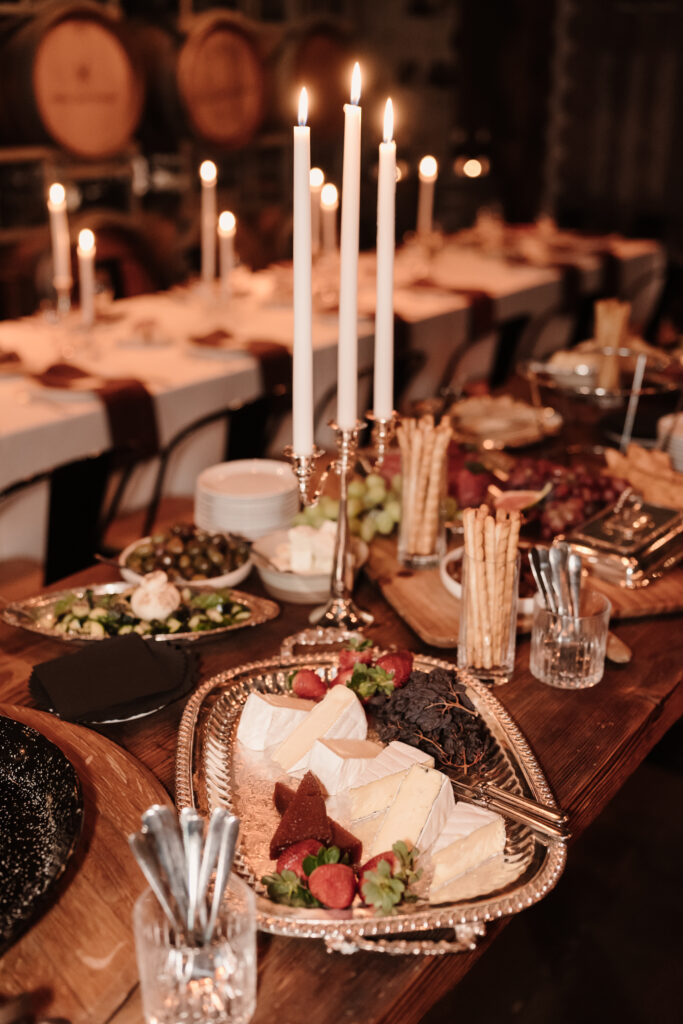
Shared family style feasts are one of the most generous ways to feed a wedding. Platters land in the middle of the table brimming with bold and colourful flavours, and guests serve each other rather than waiting on a sequence of courses. An Italian themed menu works beautifully in this format, with a spread of seasonal vegetable dishes, cured meats, cheeses and slow-cooked mains arriving together. Conversation tends to lift when the food is passed rather than delivered.
Canapés, Stations and Roving Desserts
For a cocktail style celebration, finger food canapés carry the first hour while guests mingle. Live food stations add theatre and give people a reason to move through the space. Roving desserts are a lovely alternative to a single cake moment, letting sweets circulate through the crowd instead of pulling everyone back to their seats. Each of these formats gives a kitchen more opportunities to work seasonally, because smaller plates can change right up until the week of the wedding.
Wood-Fired and Late-Night Moments
The last hour of a wedding is often the one people talk about most. Wood-fired late-night food, served when the dance floor is full and the formalities are long finished, keeps energy high and gives guests something warm to hold. It is also a natural home for whatever is abundant at the time, folded into flatbreads, skewers or simple handheld plates.
Dessert That Follows the Season
Dessert is where seasonality shows off most obviously. A flourless almond torta caprese sits comfortably beside a strawberry pavlova with crème diplomate, one leaning rich and nutty, the other bright and fruit-driven. On the savoury side, plates built from baby carrot, petite asparagus, hazelnut crunch and a generous grand aioli show how much can be done with produce alone. These are the kinds of dishes that make guests ask what was in them.
Letting Your Season Shape the Menu
Your wedding date decides more about the food than most couples realise. Weather sets the tone for the whole day, and the menu should answer it. Rather than locking in a fixed list of dishes a year out, it helps to agree on a style and a direction, then let the kitchen refine the specifics as the date approaches and the season becomes clear.
Warmer Months
Longer, lighter days suit food that feels fresh and unfussy. Think fresh, vibrant plates, plenty of herbs, seafood, grilled vegetables and fruit-led desserts. Shared feasts work particularly well when the weather invites guests to linger outside, and cold canapés with a glass of something crisp set the right tone from the first hour.
Cooler Months
Cooler celebrations call for warmth and generosity. Slow-cooked mains, wood-fired elements, root vegetables and rich, comforting desserts feel right when the light fades early. Spice-led menus also shine in winter. Fragrant biryani, fresh breads, seasonal vegetables and elegant accompaniments bring heat and fragrance to a cold evening without losing the seasonal thread.
If you have a specific dish in mind, ask how it can be adapted to the season rather than assuming it has to be dropped. Most kitchens will offer a version that keeps the spirit of the dish intact.
Wine Pairings That Follow the Food
Regional wine pairings make the most sense when they are chosen alongside the menu rather than after it. A beverage decision made in isolation tends to fight the food. A pairing built around the produce, the sauces and the pace of the meal tends to disappear in the best way, because nobody has to think about it.
For couples hosting at the Red Hill Lavender Farm, beverage only packages are available, which suits celebrations bringing in their own catering arrangements. Everywhere else, food and drink are handled together so the two are designed as one experience.
Questions Worth Asking About Seasonal Sourcing
If seasonal produce matters to you, ask about it directly during your planning conversations. A few questions get to the heart of how a kitchen actually works:
- Which ingredients are at their best around our wedding date?
- How often does the menu change through the year, and when is it finalised?
- Which suppliers do you work with, and how local are they?
- Can you build a shared feast, a plated dinner or a station-based menu from the same seasonal produce?
- What happens if something we have chosen is unavailable in the week of the wedding?
Clear answers to those questions tell you more about a kitchen than any sample menu will.
One Team, One Menu, One Experience
Ever After Effect is not a planning business with a venue attached. It is a fully integrated wedding experience where the food is as intentional as the flowers and the photography as considered as the table setting. Catering across our venues is handled by The Epicurean Group, which means the kitchen is embedded in the planning process rather than bolted on at the end. Seasonal produce, shared Italian feasts, regional wine pairings, live food stations and wood-fired late-night moments are not add-ons. They are the soul of the celebration.
Our venues include The Epicurean Red Hill, Mantons Creek Estate, The Cambium, the Red Hill Lavender Farm, Panagia Kamariani Greek Orthodox Church and Ashcombe Gardens. The Red Hill Lavender Farm also offers a food truck option and beverage only packages. Because everything sits under one team, the menu, the styling, the photography and the coordination are all speaking the same language well before the day arrives. We keep pricing out of the website and talk it through personally instead, so if you would like to see the numbers and the menus together, send through an enquiry and our wedding brochures will be emailed straight to you.
Frequently Asked Questions
What does seasonal mean on a wedding menu?
It means the kitchen builds dishes around produce that is at its best around your wedding date, rather than ordering the same ingredients all year round. On the Mornington Peninsula that usually involves trusted suppliers and letting the week’s harvest guide the final details, so the food tastes fresh and specific to your celebration rather than generic.
Can we still request a dish that is not in season?
You can always ask. A good kitchen team will tell you honestly what will taste best on your date and suggest a seasonal alternative that delivers the same idea. Sometimes a much-loved dish is worth keeping anyway, so raise it early and let the chefs work through the options with you.
Should we choose the date or the menu first?
Choose the date first, then let the menu follow the season. Once your date is set, the kitchen can tell you which dishes will be at their peak and which styles suit the weather. A shared feast feels very different in summer than in the middle of winter, so the date quietly shapes everything on the table.
Do you cater for different menu styles?
Yes. The Epicurean Group caters across canapés, shared family style feasts, plated courses, live food stations and late-night wood-fired moments. A food truck option is available at the Red Hill Lavender Farm, along with beverage only packages. Menus are shaped around your date, your guest list and the produce available at the time, and any specific detail is best confirmed directly with the team when you enquire.
